
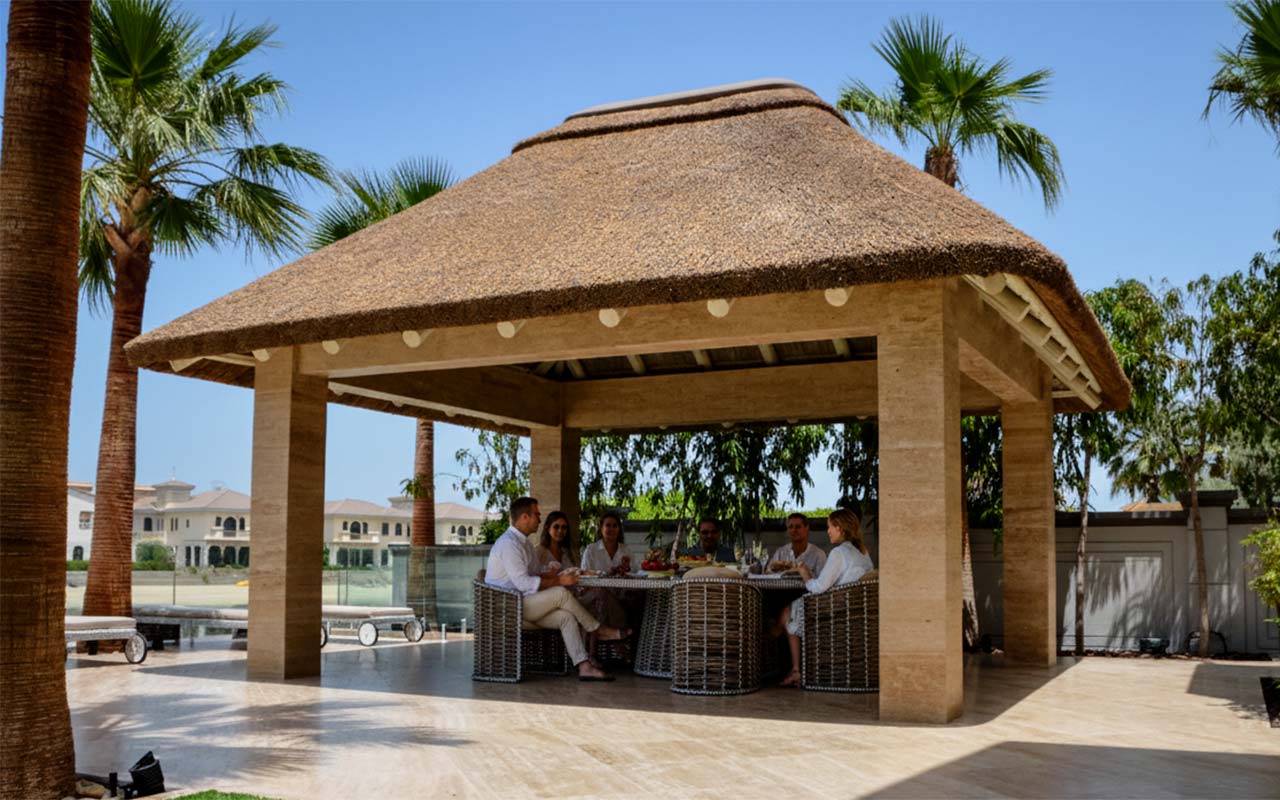
When designing an outdoor structure, the material you choose plays a major role in aesthetics, comfort, durability, and environmental impact. Thatch, bamboo, and synthetic materials are all popular options, but each offers very different benefits.
In this guide, we compare thatch vs bamboo vs synthetic materials to help you make an informed decision for your outdoor space.
1. Thatch: Timeless, Natural & Climate-Responsive
Thatch has been used for centuries and remains one of the most sustainable and visually striking roofing materials available today.
Key Benefits of Thatch
- Excellent natural insulation
- Keeps spaces cool in hot climates
- Fully renewable and biodegradable
- Creates a luxurious, organic aesthetic
Thatch roofs regulate temperature naturally, reducing the need for artificial cooling. This makes them ideal for warm regions and outdoor living spaces where comfort is key.
Considerations
- Requires professional installation
- Periodic maintenance is essential
- Fire protection treatments such as Fireshield are recommended
Best suited for:
Gazebos, chiringuitos, beach resorts, lodges, luxury residential projects, and eco-focused developments.

2. Bamboo: Lightweight, Versatile & Fast-Growing
Bamboo is often marketed as one of the most sustainable building materials due to its rapid growth and flexibility.
Key Benefits of Bamboo
- Fast-renewing natural resource
- Lightweight yet strong
- Flexible for creative architectural designs
- Distinctive tropical appearance
Bamboo works well for decorative structures, shading elements, and design features where visual impact is more important than long-term durability.
Considerations
- Requires chemical treatment to prevent pests
- Shorter lifespan if exposed to harsh weather
- Not ideal for heavy structural loads
Best suited for:
Decorative pergolas, privacy screens, feature walls, and tropical-style outdoor areas.
3. Synthetic Materials: Low Maintenance but Less Natural
Synthetic materials are designed to mimic the look of natural products while offering durability and consistency.
Key Benefits of Synthetic Materials
- Minimal maintenance required
- Resistant to pests and moisture
- Consistent appearance over time
- Often lower upfront maintenance costs
These materials are commonly chosen for projects where ease of care and uniformity are priorities.
Considerations
- Limited breathability and insulation
- Can retain heat in warm climates
- Less environmentally friendly
- Lacks the authentic look and feel of natural materials
Best suited for:
Commercial projects, urban environments, and areas with strict maintenance constraints.

4. Sustainability Comparison
| Material | Renewability | Environmental Impact | End of Life |
|---|---|---|---|
| Thatch | Very High | Low | Fully biodegradable |
| Bamboo | High | Low–Medium (treated) | Partially biodegradable |
| Synthetic | Low | High | Non-biodegradable |
If sustainability is a key priority, thatch and bamboo outperform synthetic materials in both environmental impact and long-term ecological value.
5. Durability & Maintenance
- Thatch: Long lifespan when properly maintained and installed by experts
- Bamboo: Moderate durability, best in sheltered environments
- Synthetic: High resistance but limited performance in extreme heat
Natural materials require care, but they reward owners with comfort, beauty, and reduced environmental impact.
6. Which Material Is Right for Your Project?
Choose thatch if you want:
- Superior comfort and insulation
- A luxury, organic aesthetic
- A truly sustainable solution
Choose bamboo if you want:
- A lightweight, tropical design
- Flexible architectural forms
- Decorative impact
Choose synthetic materials if you want:
- Low maintenance
- Consistency
- A practical solution over natural character

Final Thoughts
The right material depends on your climate, design goals, sustainability values, and how you plan to use your outdoor space. While synthetic materials offer convenience, natural materials like thatch and bamboo create healthier, more inspiring environments that connect people to nature.
At Cape Reed, we specialize in designing and building outdoor structures using responsibly sourced natural materials that stand the test of time.
If you’re planning an outdoor project and need expert guidance, our team is ready to help you choose the perfect solution.
