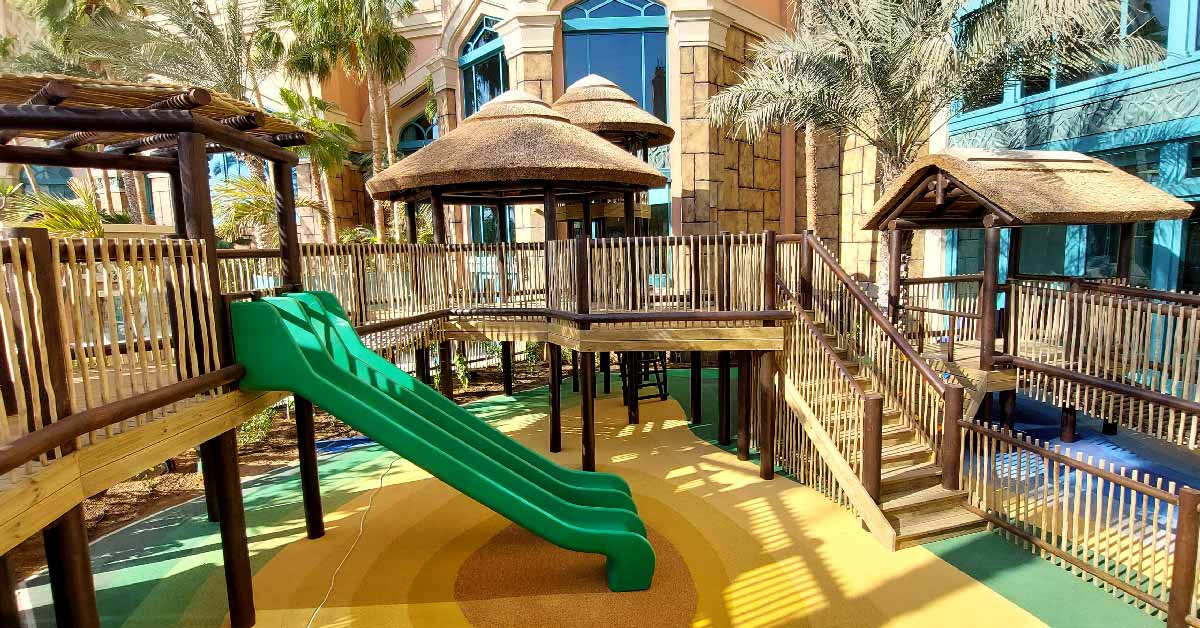
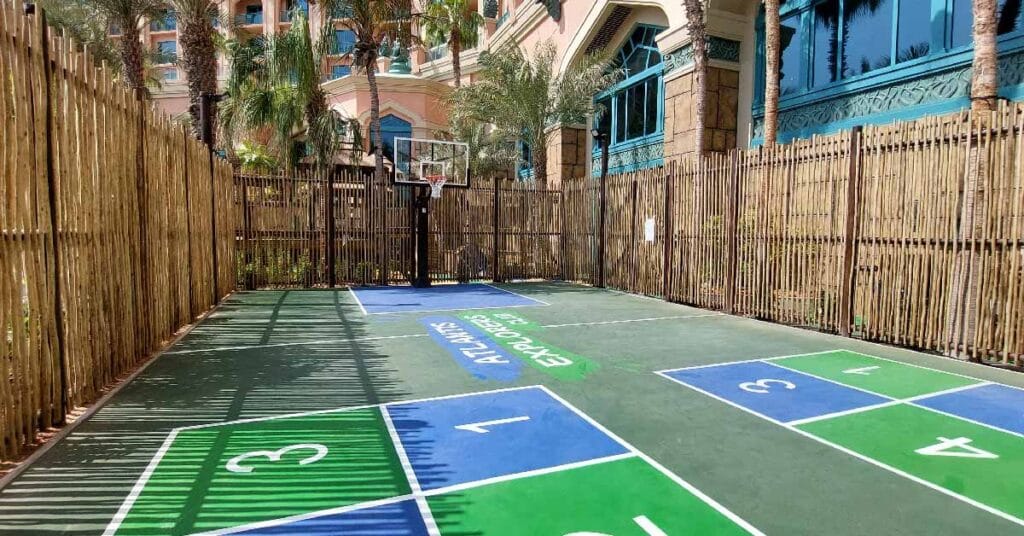
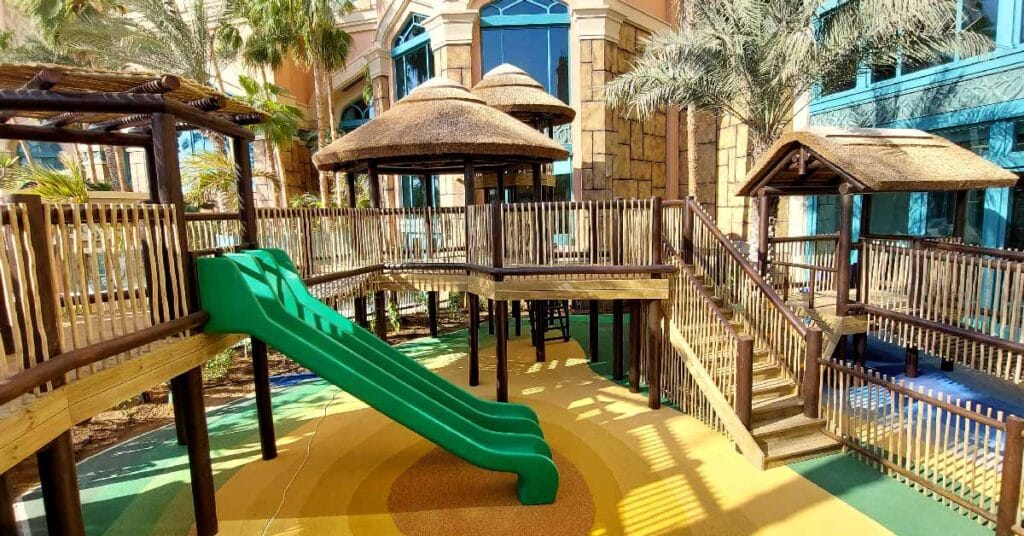
The Explorer’s Club at Atlantis The Palm, a renowned destination for families, has taken its facilities to the next level with a stunning new outdoor play area. Designed and constructed by Cape Reed, a leader in sustainable timber structures, this space is a masterpiece of thoughtful design, sustainability, and child-centric innovation. Built in compliance with EN1176 standards—the European safety benchmark for playground equipment—this new addition ensures a safe, engaging environment for children of all ages.
A Commitment to Sustainability
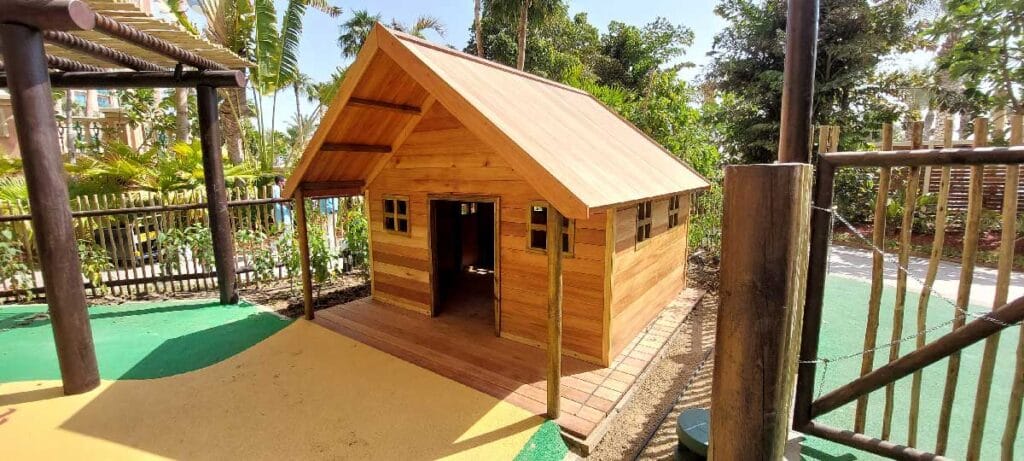
One of the standout features of this play area is its exclusive use of sustainable timber structures. Timber is not just an aesthetic choice; it’s a commitment to environmentally friendly building practices. The wood used in these structures is responsibly sourced, contributing to reduced carbon footprints and promoting sustainability in construction.
Designed for Every Child
The play area has been meticulously designed to accommodate children of all ages, with features that cater to a variety of developmental stages. Whether it’s climbing, sliding, or imaginative play, the structures encourage children to explore, challenge themselves, and develop essential physical and emotional skills. From toddlers taking their first steps of independence to older children building coordination and strength, the play area offers something for everyone.
The Benefits of Wooden Play Structures
- Physical Development
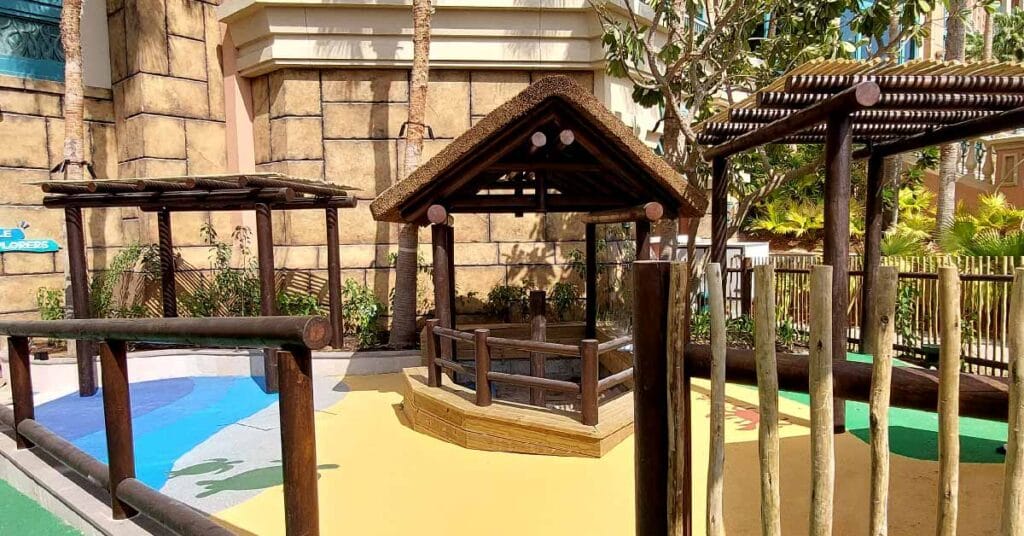
The natural surfaces of timber structures enhance grip, providing a safer and more challenging environment for children to climb, balance, and explore. This kind of physical activity builds strength, agility, and coordination, laying the foundation for a healthy lifestyle. - Emotional Growth
Playing in nature-inspired settings has been shown to reduce stress and anxiety in children. Wooden structures, with their organic feel and earthy tones, create a calming environment that fosters creativity, social interaction, and emotional well-being. - Encouraging Imagination
The rustic charm of timber invites children to engage in imaginative play. Whether they’re pretending to be explorers scaling a treehouse or adventurers in a jungle fort, these structures inspire creative thinking and storytelling.
Why Timber Outshines Metal in Middle Eastern Climates
In the Middle East, where soaring temperatures are the norm, timber is the ideal building material for outdoor play areas. Unlike metal, which can become dangerously hot under the desert sun, timber remains relatively cool to the touch, ensuring safe play even during peak heat hours. Additionally, wood’s natural insulating properties provide comfort and durability, standing up well to the harsh climate without significant wear or temperature sensitivity.
A Model of Excellence
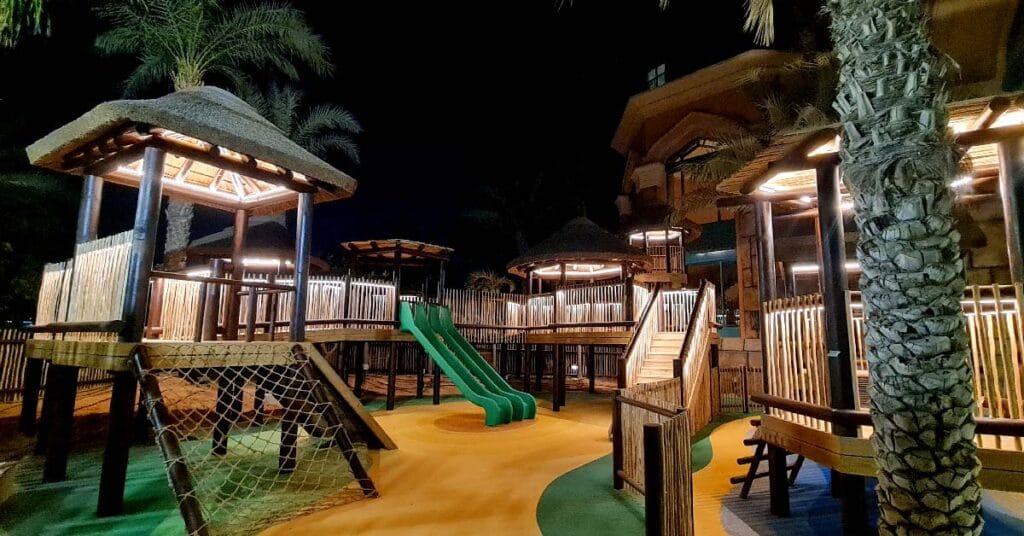
Cape Reed’s design philosophy blends form, function, and sustainability, creating play areas that are not only fun but also safe and environmentally conscious. Their expertise in timber construction has turned the Explorer’s Club outdoor play area into a model of excellence, setting a benchmark for playground design in the region.
A Destination for Family Fun
With the addition of this beautifully crafted outdoor play area, Atlantis The Palm continues to cement its reputation as a family-friendly destination. Whether your child is taking their first steps into adventurous play or looking to expand their physical abilities, the Explorer’s Club offers an unforgettable experience.
So next time you’re in Dubai, let your kids explore, imagine, and grow in this exceptional space that combines safety, sustainability, and fun.
FAQs
Q1: What is the Explorer’s Club outdoor play area at Atlantis The Palm?
The Explorer’s Club outdoor play area is a newly designed space for children at Atlantis The Palm, built by Cape Reed using sustainable timber structures to provide a safe, engaging, and environmentally friendly play environment.
What safety standards does the play area meet?
The play area complies with EN1176 standards, the European safety benchmark for playground equipment, ensuring a secure and child-safe environment.
Why is timber used for the play structures?
Timber is used for its sustainability, durability, and suitability for Middle Eastern climates, remaining cool to the touch under high temperatures and offering a natural, calming aesthetic.
What are the benefits of wooden play structures for children?
Wooden play structures enhance physical development, support emotional growth, and encourage imaginative play by providing a safe, natural, and stimulating environment.
How does the play area accommodate children of different ages?
The play area features designs catering to various developmental stages, from toddlers to older children, offering activities like climbing, sliding, and imaginative play to suit all age groups.

About Cape Reed Team
Our expert team at Cape Reed Spain brings decades of experience in sustainable thatching and premium outdoor living solutions.
You Might Also Like
Discover more outdoor living inspiration

Designing Thatched Outdoor Spaces for Hotels and Resorts: What Developers Need to Know
The outdoor space of a luxury hotel or resort is not a finishing touch. It is a defining feature — the element that gues...

Why Cape Reed Uses Timber — And Why That’s the Sustainable Choice
There’s a question that comes up more often than you might expect, especially among architects and developers who ...

Inside Cape Reed’s Projects in Saudi Arabia: From Misk School to Red Sea Global
Saudi Arabia is entering a new era of design, development, and global ambition. From visionary tourism destinations to c...