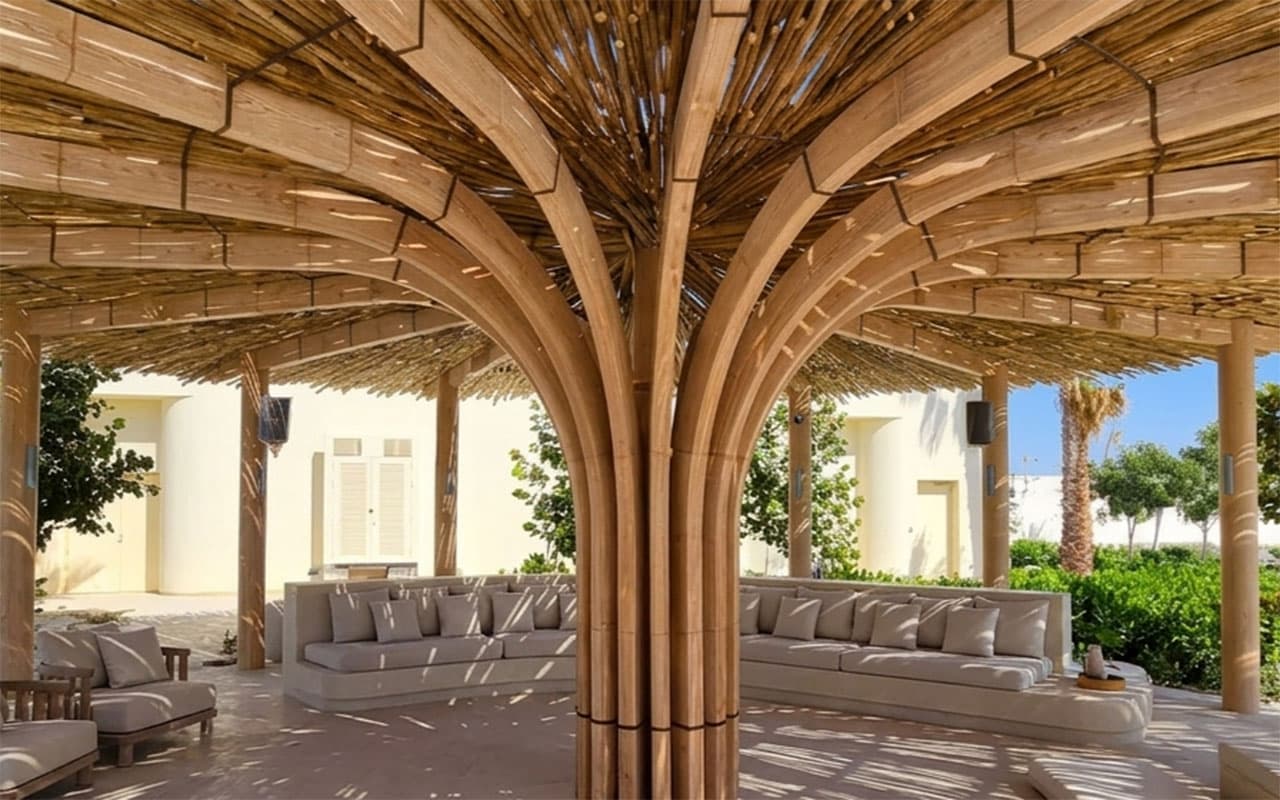
Cape Reed is proud to have contributed to one of Saudi Arabia’s most exciting resort developments — delivering two bespoke natural structures that bring warmth, character, and sustainable craftsmanship to Shura Island.
A Landmark Project on Shura Island
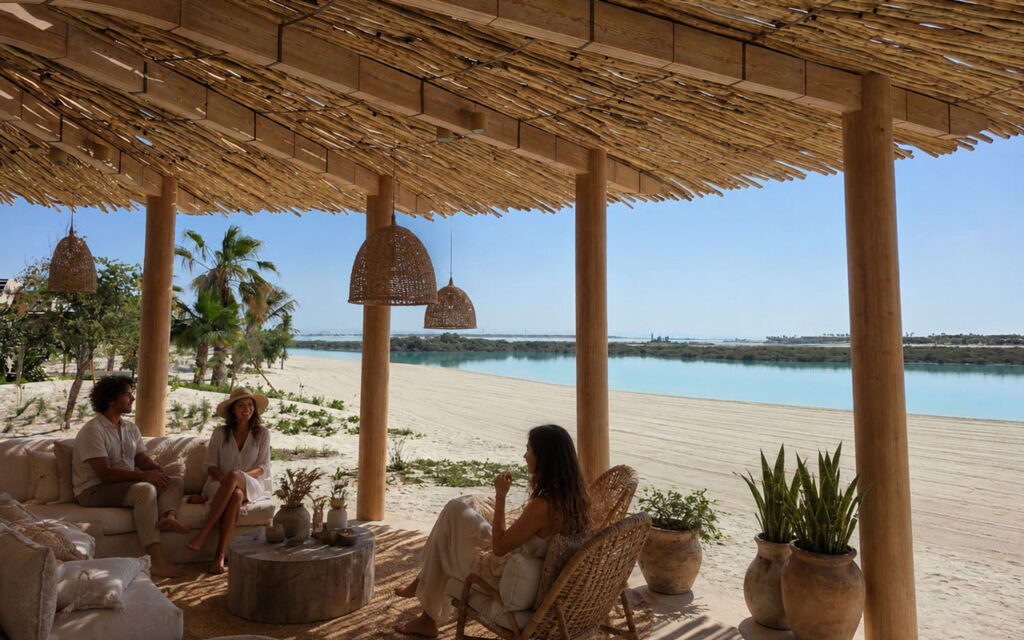
Shura Island is part of Saudi Arabia’s extraordinary coastal development programme — a destination resort experience set against turquoise waters and open skies. When the opportunity arose to contribute to this iconic project, Cape Reed brought its signature expertise in natural materials to create two distinct structures that anchor the resort’s outdoor experience.
Cape Reed’s contribution to this landmark project includes sustainable timber construction and natural thatching, combining organic aesthetics with environmentally responsible building methods that are both beautiful and built to endure.
Structure One: The Timber-Lath Kiosk
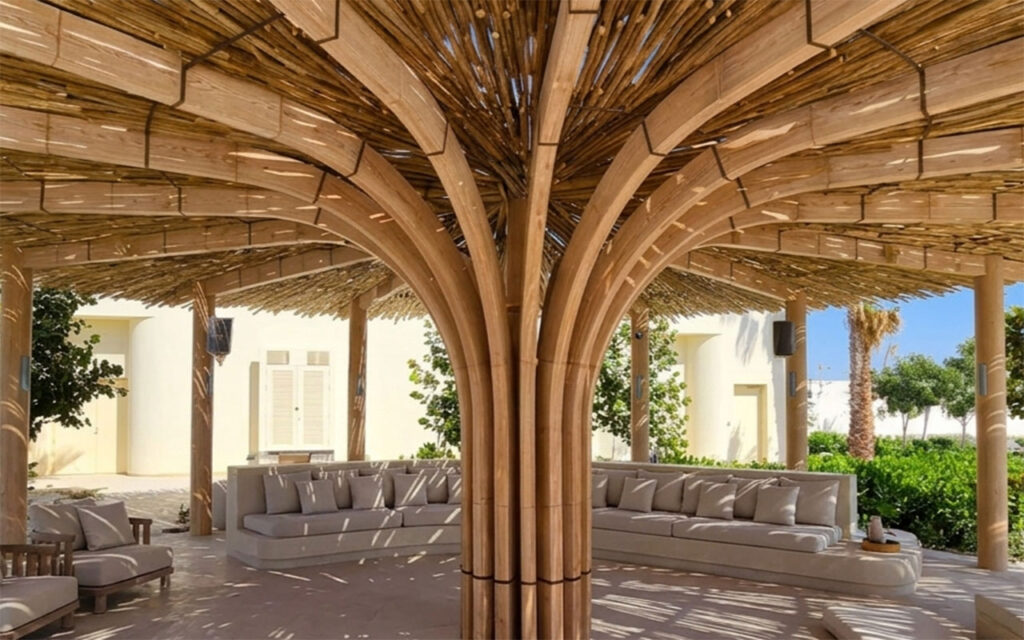
The first structure is an open kiosk finished entirely with timber laths — a technique that creates striking, light-filtering geometry from a single natural material. The layered lath cladding produces a sense of texture and movement as sunlight shifts throughout the day, casting intricate shadow patterns across the interior. Structurally simple but visually compelling, the kiosk is a testament to what skilled craftsmanship with honest materials can achieve.
Timber construction like this is inherently sustainable. Wood is one of the only building materials that actively sequesters carbon during its growth, and when responsibly sourced, it carries a significantly lower embodied carbon footprint than steel or concrete alternatives. Timber also offers natural thermal regulation — keeping covered spaces cooler in the heat of the day — making it an ideal choice for the Gulf climate.
Structure Two: The Thatched Entertainment Pavilion
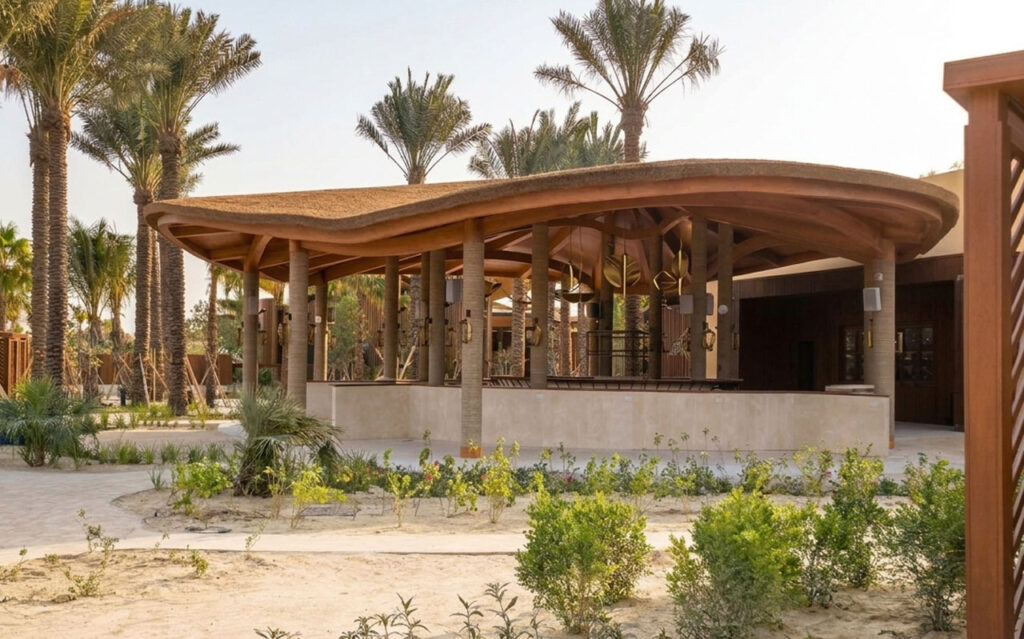
The second structure is a large-format thatched roof covering the resort’s entertainment and bar area. The sweeping, organic form of the thatch roof creates an inviting, shade-rich gathering space that feels at once rooted in place and architecturally distinctive. Natural thatch is one of the world’s oldest roofing traditions, and for good reason — it provides outstanding insulation, naturally regulates temperature, and creates an atmosphere no engineered material can replicate.
Thatch is a renewable, biodegradable material with minimal processing requirements. Its production generates little to no harmful by-products, and at the end of its service life it returns naturally to the environment. For a destination resort committed to sustainability, there are few roofing choices as responsible — or as beautiful.
Sustainability
Carbon-storing timber
Timber sequesters CO₂ as trees grow, making it one of the few carbon-negative structural materials available to builders.
Natural insulation
Thatch roof systems provide some of the highest natural insulation values of any roofing material, reducing cooling loads in hot climates.
Fully renewable
Both reed thatch and sustainably harvested timber are fully renewable, with no toxic by-products during production or end-of-life.
Supporting Vision 2030
Saudi Arabia’s Vision 2030 places sustainability at the heart of new development. Natural materials like timber and thatch are aligned with these national goals.
Building for Saudi Arabia’s Future
As Saudi Arabia continues its remarkable transformation under Vision 2030, sustainable construction is not simply an aesthetic choice — it is a commitment embedded in the kingdom’s development philosophy. Projects like Shura Island reflect a deliberate intent to create world-class destinations that are in harmony with both the natural environment and the cultural landscape of the region.
At Cape Reed, we are honoured to play a role in shaping some of the region’s most innovative and sustainable destinations. Projects like these reflect our passion for crafting natural architecture that connects people with extraordinary places — and our belief that the most enduring structures are always those built with respect for the materials, the climate, and the people who will use them.
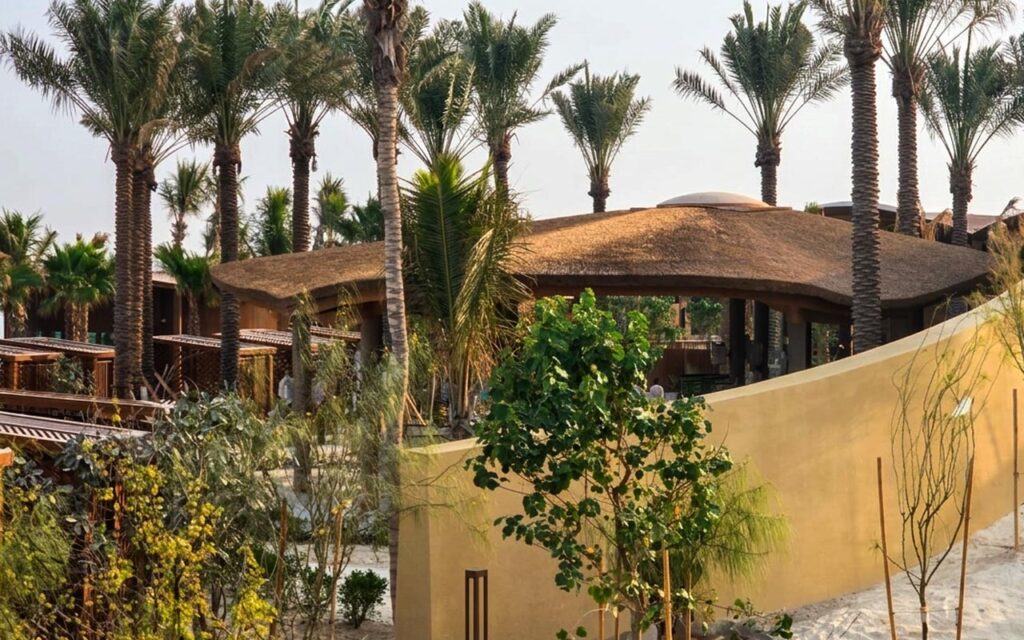
FAQ’s
What did Cape Reed construct at Shura Island?
Cape Reed built two natural structures at a resort on Shura Island, Saudi Arabia: a timber-lath kiosk and a large thatched roof covering an entertainment and bar area. Both structures were designed and built by Cape Reed using sustainably sourced natural materials.
Is thatch roofing suitable for hot, arid climates like Saudi Arabia?
Yes — natural thatch is an excellent roofing solution for hot climates. Its dense structure provides outstanding thermal insulation, helping to keep covered spaces significantly cooler than they would be under conventional roofing materials. It has been used in tropical and arid environments around the world for thousands of years.
How sustainable are thatch and timber as building materials?
Both are among the most sustainable building materials available. Timber sequesters carbon during growth and is fully renewable when sourced responsibly. Thatch is a natural, biodegradable material that requires minimal processing and returns harmlessly to the environment at the end of its life. Together, they represent a low-impact building approach that aligns with sustainable development goals.

About Cape Reed Team
Our expert team at Cape Reed Spain brings decades of experience in sustainable thatching and premium outdoor living solutions.
You Might Also Like
Discover more outdoor living inspiration
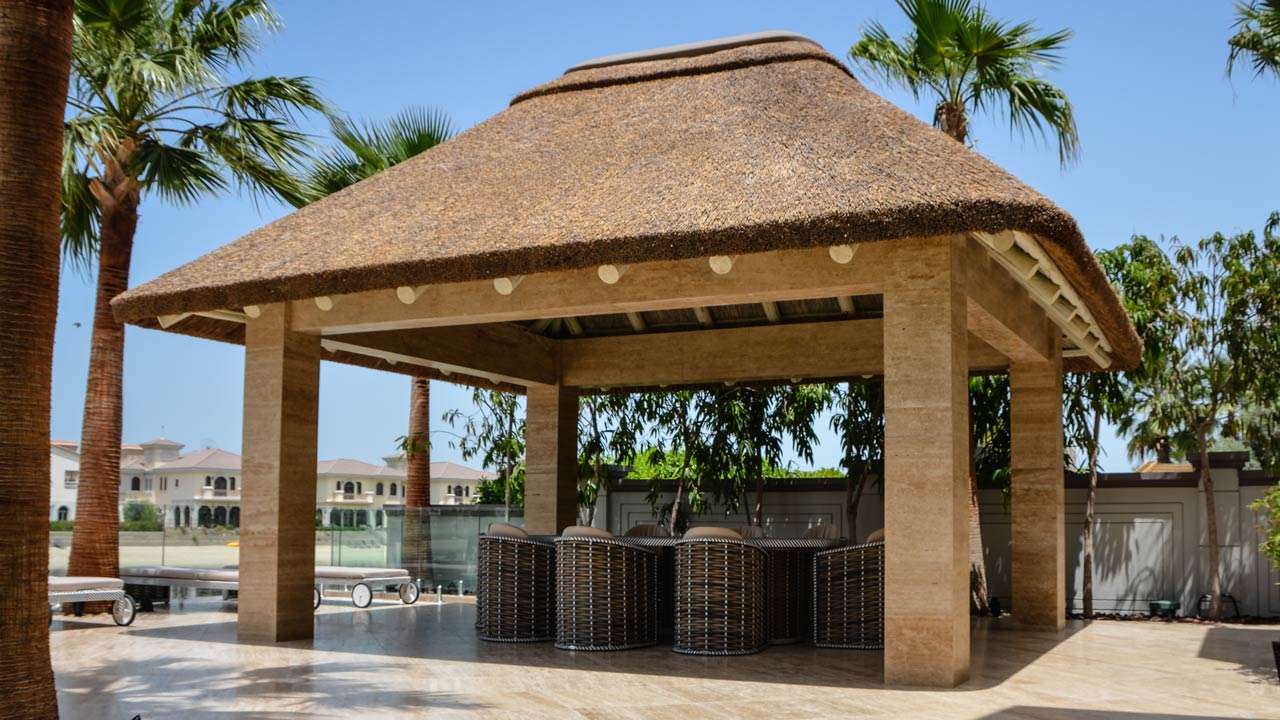
Contemporary White Wash, Palm Jumeirah
The Cape Reed design team has developed a modern contemporary white wash paint application to finish timber structures. ...
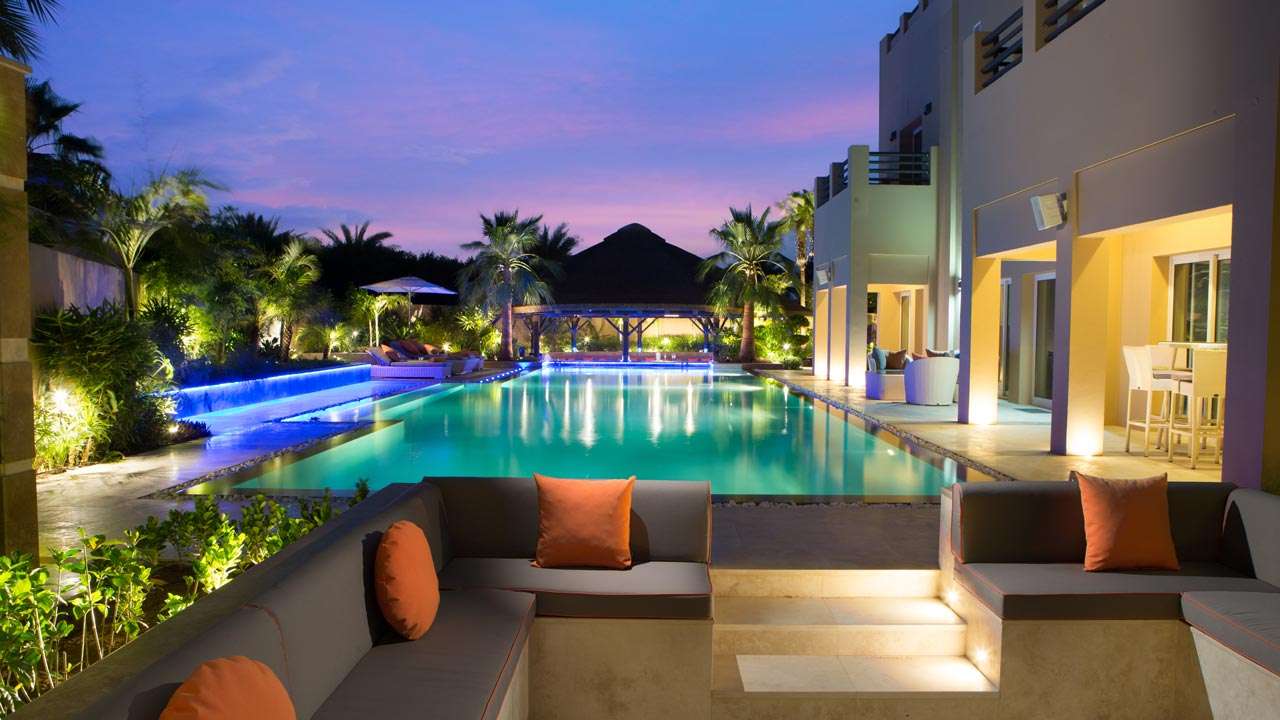
Exclusive Outdoor Living in Dubai
Imagine stepping into a world where outdoor living surpasses every expectation, where every corner of a villa in Arabian...
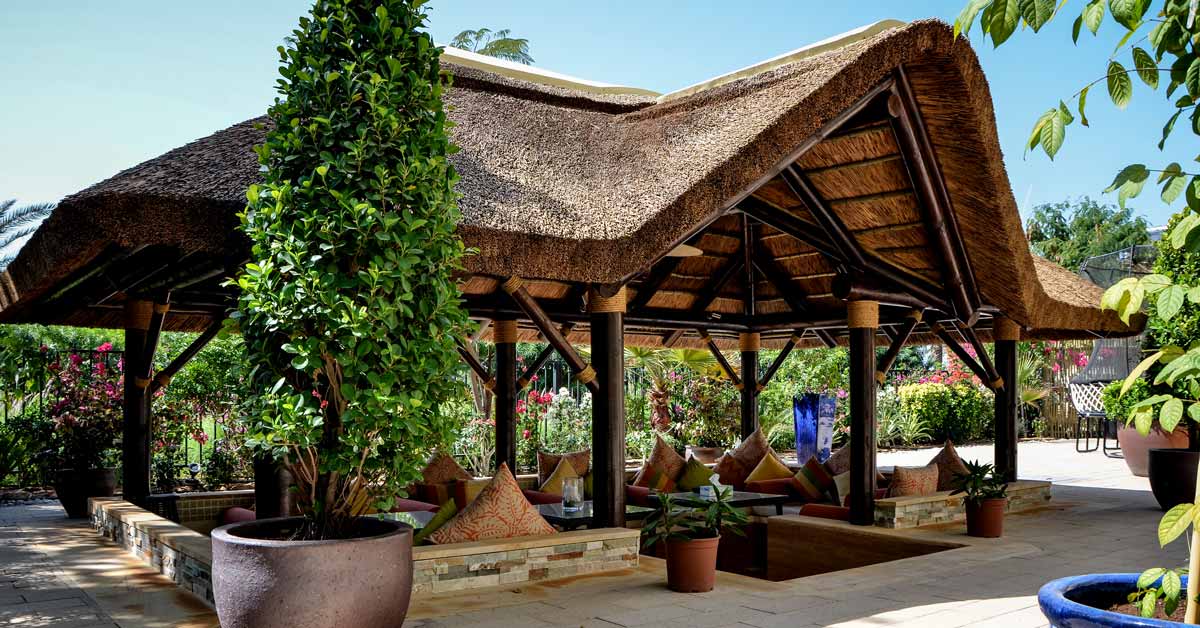
Spectacular Outdoor Transformation
One would think in order to escape the ever present Middle Eastern heat and humidity a swimming pool would be an absolut...