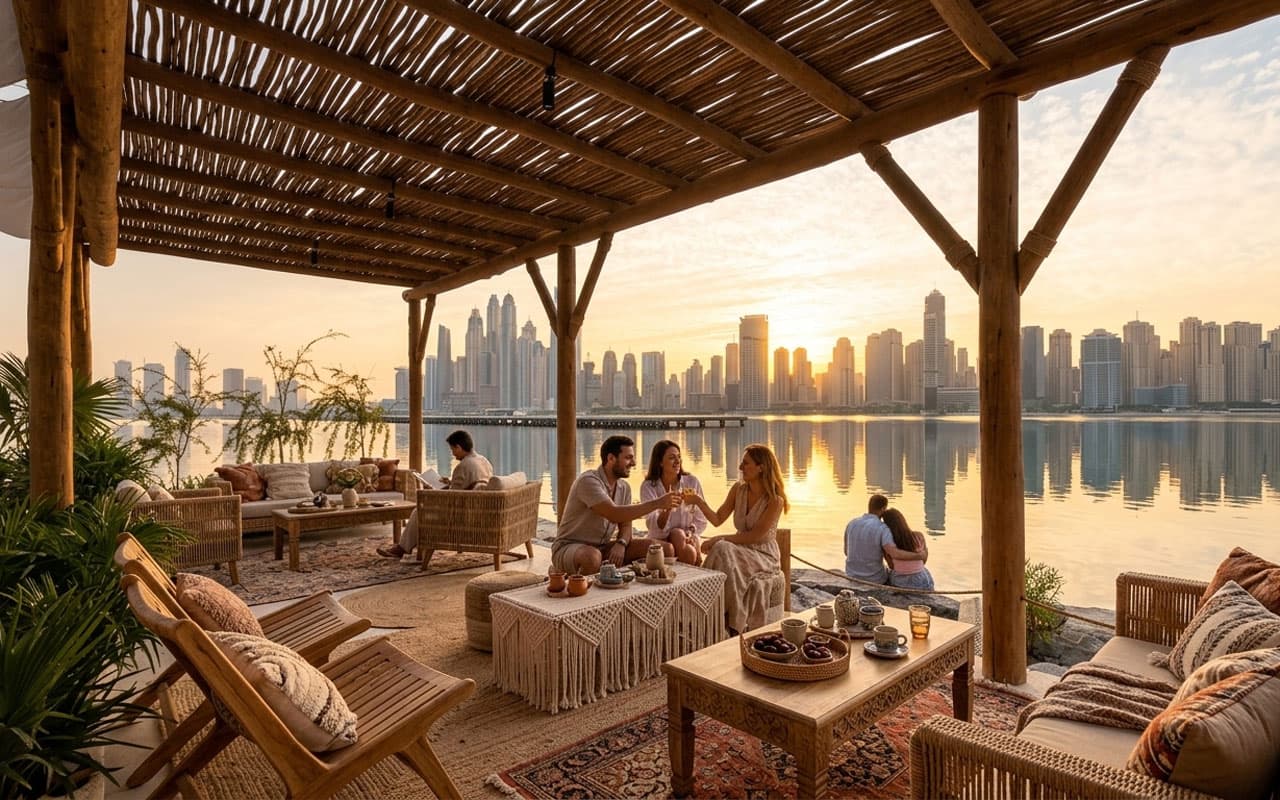
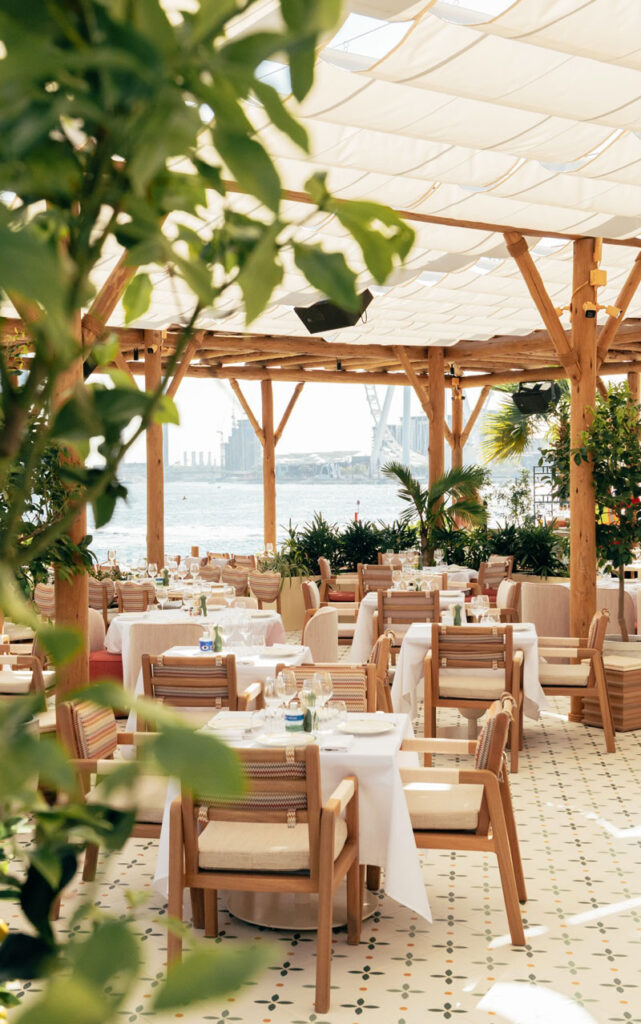
Cape Reed is proud to have delivered one of Dubai’s most atmospheric dining destinations — a sweeping 363 m² timber pergola at Giulia by the Beach, situated on the waterfront at Bebé Beach, Dubai Harbour.
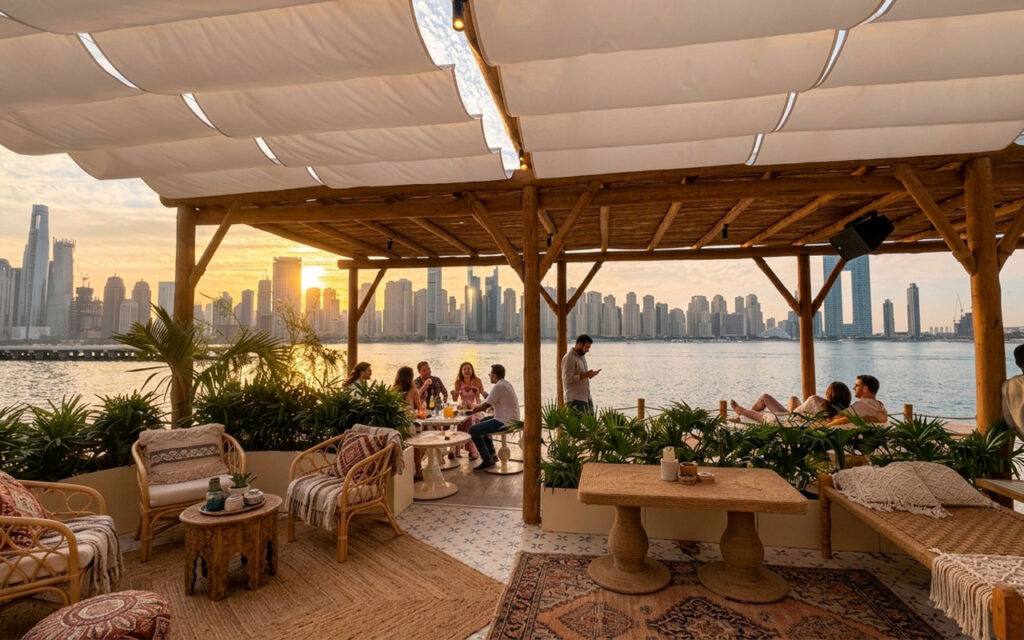
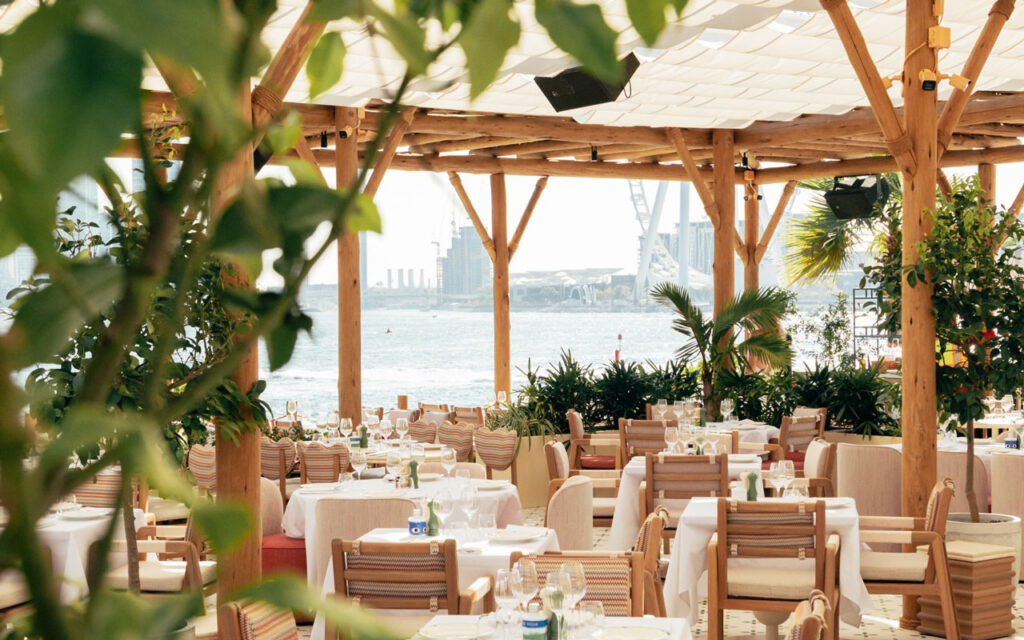
The brief was clear: create a structure that feels as good as it looks. One that provides natural shade and shelter without interrupting the restaurant’s most prized asset — unobstructed views across the Arabian Gulf to the Dubai skyline. What emerged is a soaring, open-aired canopy of cylindrical timber columns and cross-beamed lath work, draped with canvas shade sails and softened with cascading coastal planting. The result is a space where architecture, nature, and dining become one.
Every element of the pergola was engineered to perform in Dubai’s demanding coastal climate — from the pressure-treated structural timber selected for its resistance to humidity and salt air, to the lath spacing that diffuses direct sunlight into the kind of warm, dappled light that makes food look beautiful and guests feel at ease.
Why timber? The case for natural structures in Dubai’s commercial spaces
In a city defined by glass, steel, and ambition, timber offers something entirely different: warmth. For commercial hospitality spaces in Dubai, the material choice is not just an aesthetic decision — it is a statement about the kind of experience a brand wants to create.
Natural timber structures carry an inherent sense of calm and authenticity that no synthetic alternative can replicate. At Giulia by the Beach, the organic irregularity of each column, the texture of natural wood grain, and the way the structure casts dynamic shadows throughout the day all contribute to an environment that invites guests to slow down, linger, and return.
From a commercial perspective, timber pergolas offer exceptional value. They can be designed and built in a fraction of the time required for permanent concrete or steel structures, making them ideal for hospitality venues that need to respond to seasonal demands or evolving brand identities. They are also genuinely flexible — the same structural system that frames an al-fresco dining terrace today can be extended, reconfigured, or re-clad tomorrow.
For beachside and waterfront venues in particular, timber’s natural thermal properties make it far more comfortable than metal alternatives. Steel heats rapidly in direct sun and retains that heat long into the evening; sustainably sourced timber, by contrast, stays cool to the touch, reducing the ambient temperature beneath the canopy and contributing to a more comfortable dining experience — without the energy cost of mechanical cooling.
Sustainability and the future of timber in construction
Timber is the world’s oldest building material, and it is experiencing a remarkable resurgence — not out of nostalgia, but out of necessity. As the construction industry grapples with the environmental cost of concrete and steel production, sustainably managed timber is emerging as one of the most credible low-carbon alternatives available.
Cape Reed sources all structural timber exclusively from sustainably certified, commercially managed forests. Every piece is pressure-treated to extend its working life and reduce the need for replacement, meaning that the carbon stored within the wood remains locked in place for the lifetime of the structure — decades, not years.
At a global level, the case for timber in outdoor and semi-outdoor commercial construction is compelling. Timber’s embodied carbon is a fraction of that found in steel or reinforced concrete, and at the end of a structure’s life, it can be repurposed, composted, or cleanly disposed of without generating the toxic by-products associated with synthetic alternatives.
In the Gulf region specifically, where large-scale outdoor hospitality is a growing sector, timber structures represent a meaningful opportunity for the industry to reduce its environmental footprint. Shade structures, pergolas, and open-air pavilions built from certified timber can contribute directly to a venue’s sustainability credentials — increasingly important to today’s environmentally aware dining guests.
At Giulia by the Beach, sustainability was woven into the build from day one. The result is a structure that not only looks beautiful but represents a considered, responsible choice — one that Cape Reed is proud to have delivered.
Delivered by Cape Reed
Cape Reed has constructed timber and thatch structures across Dubai, the UAE, Spain, KSA, and beyond, working with hospitality groups, developers, and private clients who share a belief that the best outdoor spaces are built with natural materials, expert craftsmanship, and an understanding of how people actually use space.
Giulia by the Beach is a testament to what is possible when a client’s vision and a builder’s expertise come together — a structure that frames one of Dubai’s most extraordinary views, and a dining experience that will be remembered long after the last plate is cleared.
FAQ’s
Why choose a timber pergola for a commercial restaurant or hospitality space in Dubai?
Timber pergolas create an atmosphere that steel or concrete simply cannot replicate — warm, organic, and immediately inviting. For hospitality venues in Dubai, where outdoor dining is a major draw, a well-designed timber structure provides natural shade, reduces ambient heat compared to metal alternatives, and gives a venue a distinctive identity. Cape Reed’s commercial pergolas are also engineered for the Gulf climate, using pressure-treated timber that is resistant to humidity, UV exposure, and coastal salt air.
Is timber a sustainable material for construction in the UAE?
Yes — when sourced responsibly. Cape Reed sources all structural timber exclusively from sustainably certified, commercially managed forests. Sustainably harvested timber has a significantly lower carbon footprint than steel or concrete, and because it stores carbon throughout its service life, a well-maintained timber structure can make a net-positive contribution to a project’s environmental credentials. We also pressure-treat all timber to maximise longevity, reducing the need for early replacement.

About Cape Reed Team
Our expert team at Cape Reed Spain brings decades of experience in sustainable thatching and premium outdoor living solutions.
You Might Also Like
Discover more outdoor living inspiration
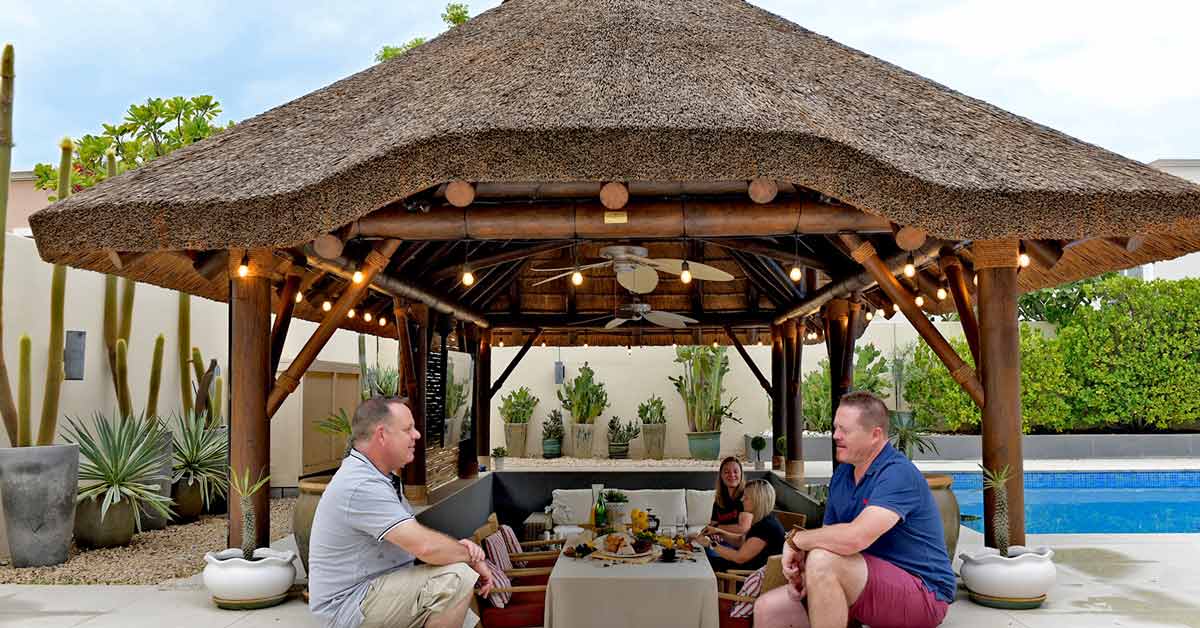
Luxury Outdoor Living in the UAE: The Complete Villa Garden Guide
There is a particular kind of satisfaction that comes from stepping out of your back door into a space that genuinely ta...
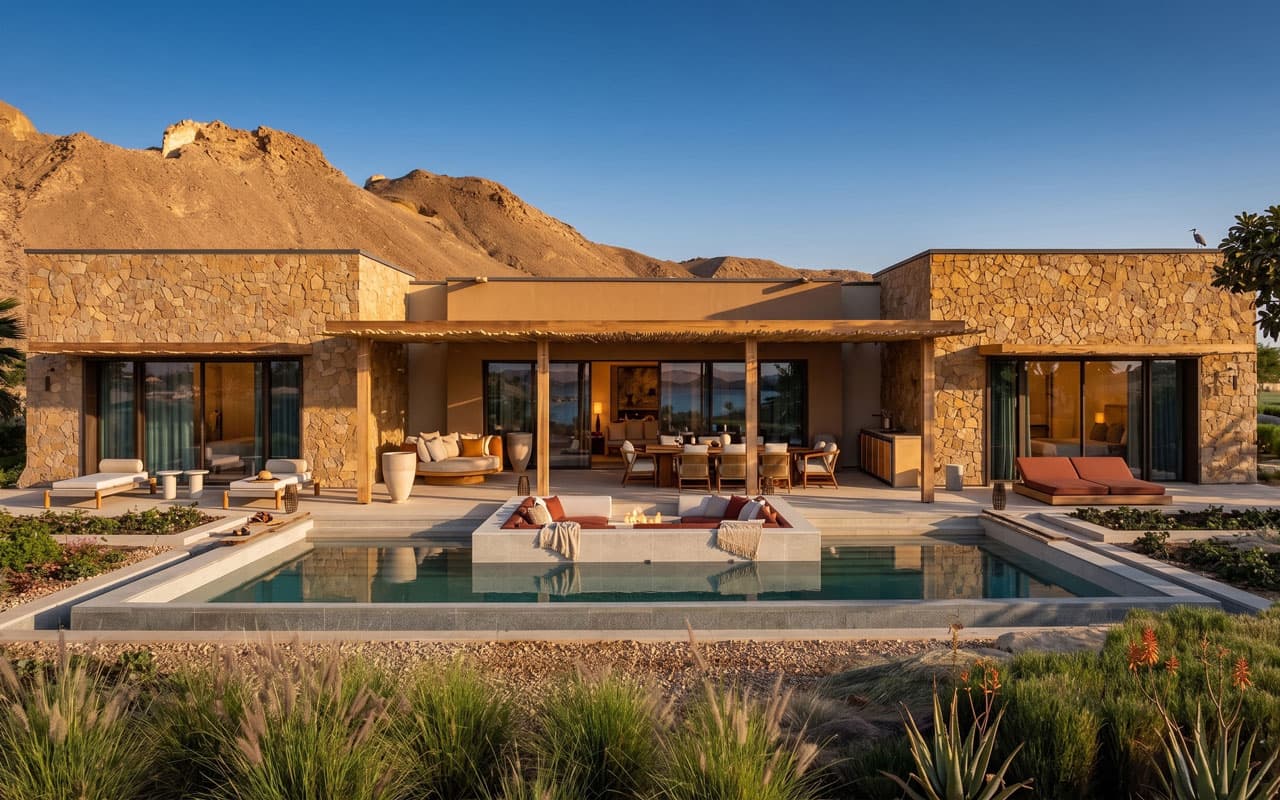
Six Senses AMAALA: Bringing Sustainable Craftsmanship to Saudi Arabia’s Red Sea Coast
There are projects that test a company, and then there are projects that define it. For Cape Reed International, Six Sen...
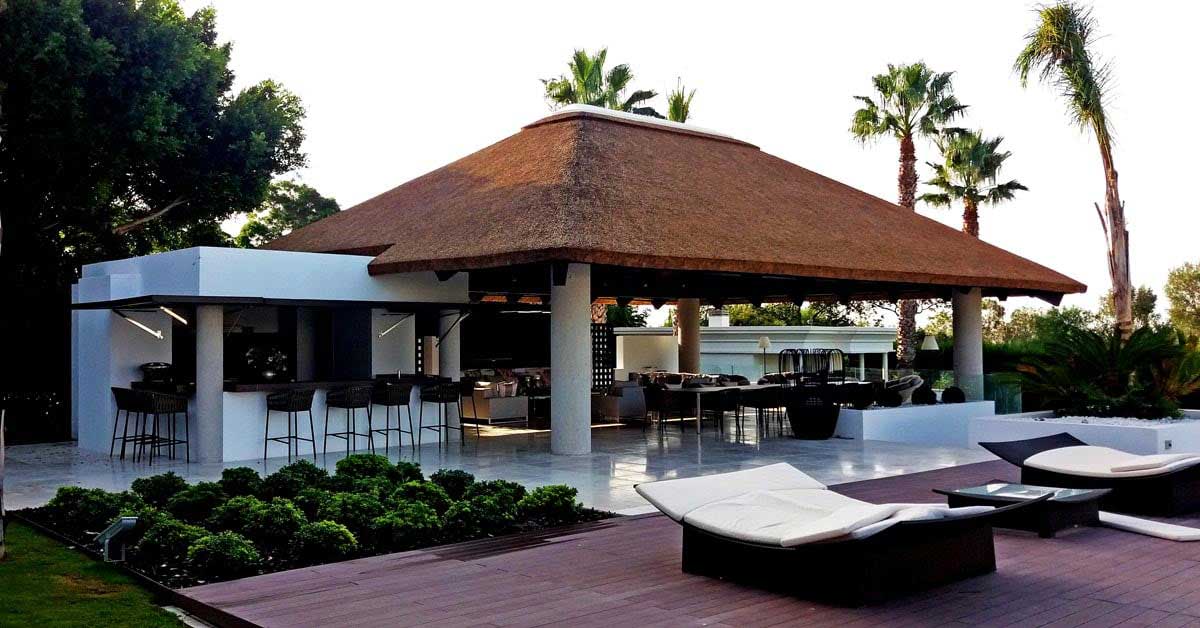
10 Outdoor Living Upgrades to Improve Your Home
Giving your outdoor living space an upgrade enhances its appearance and the value of your home. If you have guests visit...